
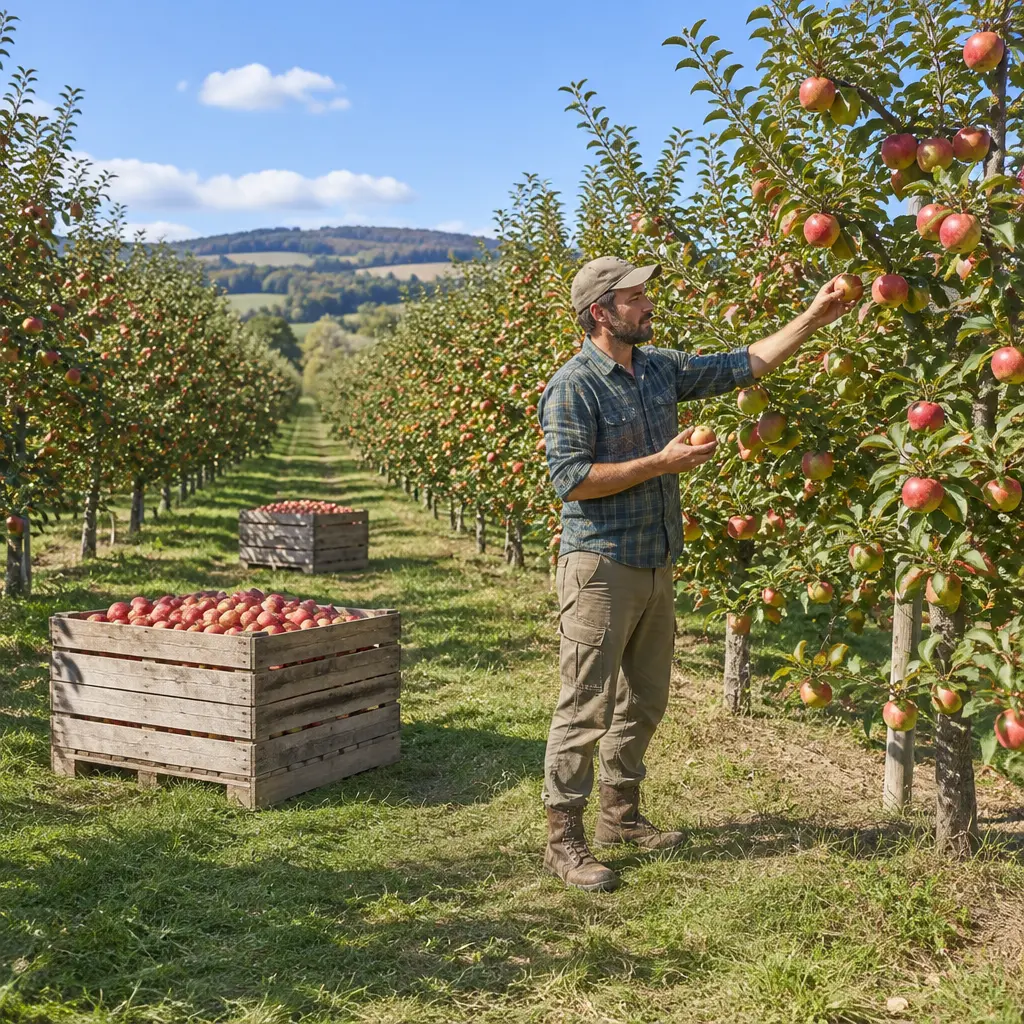
Product launch timing is the choice of when to introduce an offering to the market; for products tied to agriculture, the strongest timing often follows the harvest calendar rather than a conventional retail season. Launching near a harvest peak can align supply, buyer attention, freshness, and promotional activity—but only when the product is ready and distribution can handle the resulting demand. The Food and Agriculture Organization (FAO) estimates that about 13.2% of food is lost after harvest and before reaching retail, underscoring why harvest-aware planning matters. This guide explains how to define harvest-aligned go-to-market timing, identify the right seasonal window, coordinate supply and marketing, and measure results using agricultural calendars and real-world examples.
Go-to-market timing aligns product launches with harvest peaks
Go-to-market (GTM) timing is the planned coordination of product availability, distribution, sales, and promotion around a defined market opportunity. For harvest-dependent products, the opportunity is shaped by when a crop is available, how quickly it must be handled, and when buyers are most receptive. A launch can target fresh produce, processed ingredients, agricultural inputs, or services that help growers and food businesses manage a crop cycle.
A harvest peak is not automatically the best launch date. A fresh-food brand may benefit from abundant local supply, while a new food-processing machine may need to launch before harvest so customers can install and test it in time. The useful planning question is therefore: which point in the crop’s cycle creates the best combination of product readiness, supply reliability, buyer need, and operational capacity?
Seasonality has broad commercial significance. The FAO’s estimate that 13.2% of food is lost between harvest and retail highlights the cost of mismatches in handling, storage, transport, and market access. The figure is a global estimate, not a measure of launch failure, but it illustrates why timing and post-harvest readiness deserve a place in product strategy.
Harvest-aligned go-to-market timing connects launch plans to crop cycles
Harvest-aligned GTM timing means scheduling a product’s introduction and commercial activity in relation to crop availability and the needs of the businesses or consumers connected to that crop. It is a planning approach, not a single fixed date. The USDA National Agricultural Statistics Service (NASS) describes its Crop Progress reports as weekly tracking of planting, crop development, and harvest progress for major U.S. crops, illustrating that agricultural timing is monitored as a changing seasonal process.
The approach has several forms: launching a food product during peak ingredient availability; introducing farm equipment before planting or harvest; releasing storage or processing technology when growers and handlers need it; and timing regional campaigns to local harvest windows. These are related but distinct use cases, so a launch plan should begin by identifying its crop, geography, customer, and role in the supply chain.
Crop calendars define the opportunity window
A crop calendar is a reference for the typical timing of planting, growing, and harvesting in a particular region. FAO’s crop-calendar resources compile planting and harvesting periods across countries and crops. Such calendars are useful for initial planning, but they are not guarantees: weather, variety, elevation, irrigation, and local practices can shift actual dates.
For a launch team, the calendar should be treated as a planning baseline that is checked against local growers, processors, cooperatives, and current crop reports. A company selling a berry-based product, for example, should distinguish between the broader national season and the specific weeks when its contracted suppliers can deliver the required volume and quality.
The best launch date depends on product type
Fresh products often need to reach buyers while supply is abundant and quality is high. Shelf-stable goods can use a wider window, but still benefit from harvest-linked storytelling and ingredient procurement. Farm inputs and machinery may need to arrive before the relevant field operation, while post-harvest technologies should be available before crops begin moving through storage and processing facilities.
This distinction prevents a common planning error: equating “launch during harvest” with “launch at the right time.” The correct timing may be months earlier for products that customers must purchase, install, or learn to use before harvest begins.
Supply readiness and demand signals validate harvest launch timing
A seasonal launch is commercially sound only when the supply side and demand side can meet. Supply readiness includes confirmed volumes, quality standards, packaging, cold-chain or storage capacity, and backup sourcing. Demand validation includes buyer interviews, retailer commitments, preorder activity, search trends, and evidence that the product solves a timely problem.
Supply planning protects availability and quality
Harvest volume and timing can vary, so teams should build scenarios rather than rely on a single forecast. The FAO’s food-loss estimate reinforces the relevance of post-harvest handling: launching a perishable product without adequate cooling, transport, or processing capacity can turn a strong demand moment into waste and disappointed customers.
Useful safeguards include supplier diversification, agreed quality specifications, inventory buffers where appropriate, and clear rules for substitutions. For highly perishable products, confirm the route from farm to buyer—including cooling, packing, and delivery—before announcing a launch date.
Buyer research distinguishes seasonal interest from purchase intent
Seasonal attention does not by itself prove demand. Retailers may already have category plans, growers may have committed budgets, and consumers may associate a crop with a short buying window. Teams should test willingness to pay, order size, preferred formats, and purchasing lead times with the actual target audience.
For business-to-business products, the sales cycle is especially important. A storage system intended for harvest may need to be sold and installed well in advance; a promotion aimed at shoppers may be most effective when the product is on shelves. Aligning the launch with the customer’s decision calendar is as important as aligning it with the crop calendar.
Launch execution coordinates marketing, distribution, and operations
Once the timing window is validated, execution should make the seasonal connection clear without promising more than the supply chain can deliver. The launch plan should coordinate product availability, sales materials, channel readiness, customer support, and communications around milestones in the crop cycle.
Regional campaigns should reflect local harvest variation
Harvest dates differ by location, so a single national launch date can be too early for one market and too late for another. Regional rollouts, localized inventory, and market-specific campaign dates can better reflect actual availability. USDA NASS Crop Progress reporting provides a recurring U.S. reference for crop development, while local partners can supply more specific operational updates.
A useful visual for planning is a regional launch calendar showing expected harvest windows, supplier readiness, retailer deadlines, shipping lead times, and promotional dates on one timeline. Updating it as conditions change helps teams respond to early or delayed seasons.
Channel and inventory planning reduce missed sales
A campaign cannot convert interest if the product is unavailable in the right channel. Before launch, confirm distribution coverage, order cutoffs, replenishment frequency, shelf placement, online product information, and customer-service capacity. For products with a short seasonal window, channel partners should know how to communicate availability and what to do if supply changes.
Inventory planning should balance two risks: stockouts that waste peak demand and excess stock that remains after the season. Where forecasts are uncertain, phased releases or regional pilots can limit exposure while generating real sales data.
Seasonal messaging should be specific and supportable
Harvest-linked messaging can explain provenance, freshness, local sourcing, or the practical benefit of buying at a particular point in the season. Claims should be accurate and traceable. If a product is described as locally harvested or available only during a seasonal window, the sourcing and availability should substantiate that statement.
A strong campaign connects the seasonal reason to a customer benefit: an ingredient is at peak availability, a tool is ready before field work, or a service helps manage post-harvest handling. That is more persuasive than using harvest imagery without explaining why the timing matters.
Harvest-timed launches can be measured and improved
Measurement should connect launch timing to both commercial outcomes and operational performance. Compare results with the launch objective and the crop’s actual season, rather than judging success only by opening-week sales.
Track commercial and operational indicators
Relevant indicators include sales velocity, sell-through, retailer reorders, customer acquisition cost, conversion rate, product availability, forecast accuracy, spoilage or returns, and on-time delivery. For agricultural business products, add adoption, installation completion, utilization, and customer outcomes tied to the relevant crop operation.
Record the actual harvest dates and supply constraints alongside campaign results. This makes it possible to distinguish a weak product proposition from a late crop, an incomplete distribution rollout, or a supply interruption.
Use pilots and post-season reviews to refine the next cycle
A pilot in one region or channel can test pricing, messaging, and fulfillment before a broader seasonal rollout. After the season, review what happened against the plan: which assumptions held, when customers purchased, where stockouts or waste occurred, and how weather or crop progress changed the opportunity.
Because agricultural seasons repeat, each launch can improve the next one. Preserve the data and feedback in a shared calendar and forecast, then update the plan with supplier and customer input well before the next crop cycle.
Conclusion: plan around the customer’s crop-cycle needs
Harvest-aligned go-to-market timing connects crop calendars with product readiness, supply reliability, buyer decision cycles, and channel execution. FAO crop-calendar resources and USDA NASS progress reporting can inform the timing baseline, while local partners and direct customer research validate what is happening in a specific market. The FAO estimate that 13.2% of food is lost after harvest and before retail also reminds businesses that launch timing must account for handling and distribution—not just promotion.
Before choosing a launch date, map the crop cycle, confirm the customer’s lead time, test demand, stress-test supply, and define measurable success criteria. Then use regional pilots and post-season reviews to improve the next cycle. Further planning can begin with the FAO crop-calendar resources and USDA NASS Crop Progress reports, supplemented by local grower and buyer data.
Sources: Food and Agriculture Organization of the United Nations, The State of Food and Agriculture 2019: Moving Forward on Food Loss and Waste Reduction, https://www.fao.org/3/ca6030en/ca6030en.pdf; Food and Agriculture Organization of the United Nations, Crop Calendar, https://www.fao.org/sustainable-development-goals-data-portal/data/indicators/1231-crop-calendar/en/; U.S. Department of Agriculture, National Agricultural Statistics Service, Crop Progress and Condition, https://www.nass.usda.gov/Publications/Ag_Statistics/


