
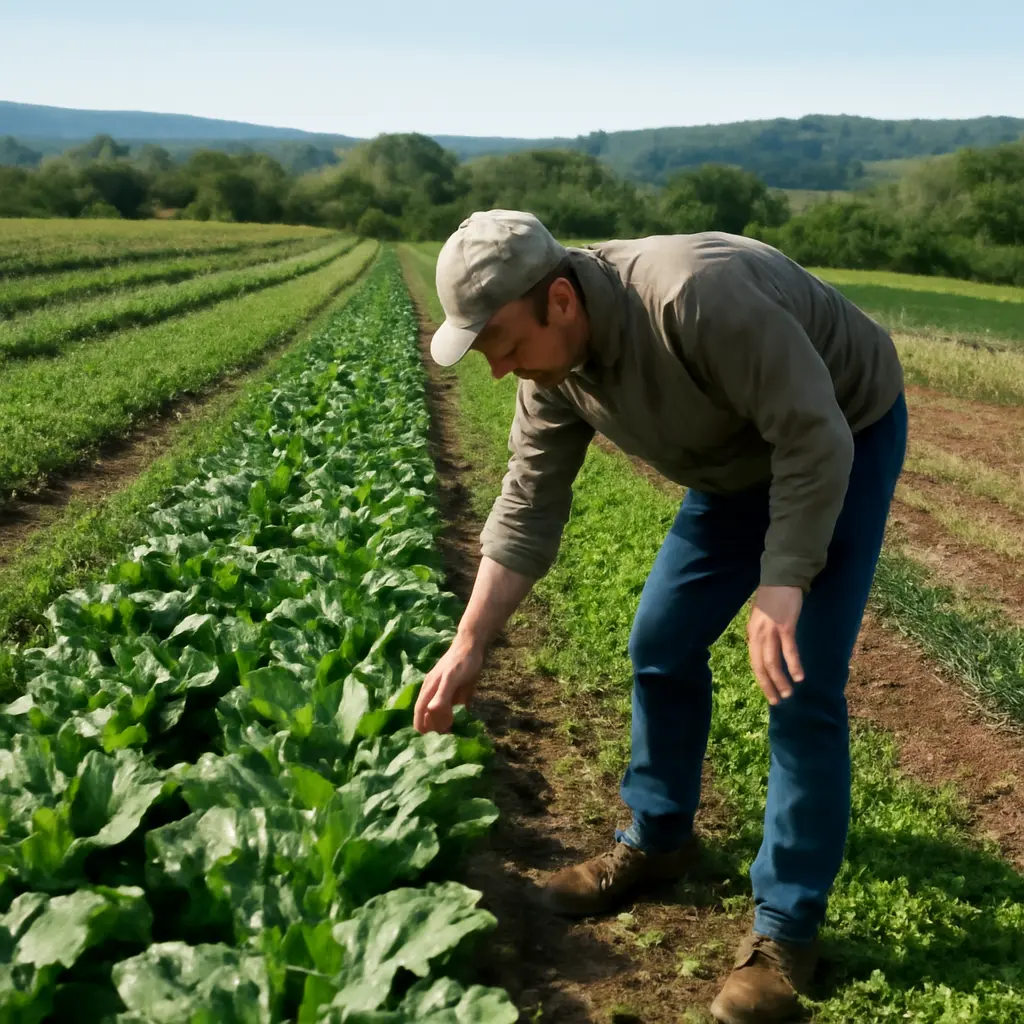
Organic food is food produced under certified standards that restrict most synthetic pesticides and fertilizers, prohibit genetically modified organisms under many major certification systems, and set rules for livestock care and processing. Its future worldwide is being shaped by the balance between rising consumer demand, climate and biodiversity pressures, affordability, credible certification, and the ability of farmers and supply chains to meet stricter expectations. The latest global benchmark from the Research Institute of Organic Agriculture (FiBL) and IFOAM—Organics International reports that, in 2022, organic farmland covered 96.4 million hectares, 2.0% of agricultural land, while retail sales reached nearly €135 billion. Those figures show both the scale of the sector and the central question ahead: how can organic food grow while remaining trustworthy, accessible, and environmentally resilient?
Market Growth and Access: Organic Food’s Global Demand
Organic food’s market growth refers to changes in consumer purchases, retail availability, and the number of producers and businesses operating under organic standards. FiBL and IFOAM define and measure the sector through country-level data on certified agricultural land, producers, and retail sales. Their 2022 survey recorded nearly €135 billion in global retail sales, with the United States, Germany, and China among the largest markets. Demand is uneven, however: high-income countries account for a large share of sales, while organic production and consumption opportunities vary widely across regions.
The market’s next stage depends not only on attracting more shoppers but also on making products available at prices and in formats that fit different incomes. That challenge connects consumer behavior to the practical cost of certification and the structure of supply chains.
Consumer Demand and Affordability
Consumer demand is the willingness to buy organic products, influenced by perceptions of health, environmental impact, animal welfare, and food quality. Organic purchases are not automatically affordable: certification, labor, separate handling, and smaller production runs can increase costs, while price differences vary by product and market. The European Commission’s Eurobarometer research on food safety has found that consumers commonly consider food safety and quality when choosing food, but these concerns should not be treated as proof that every organic product is nutritionally superior or risk-free. Clear, comparable product information can help people make choices without overstating what certification guarantees.
Regional Market Differences
Regional differences describe the geographic gap between where organic food is produced and where demand, infrastructure, and purchasing power are concentrated. FiBL’s 2022 data show that Australia had the largest area of organic agricultural land, while the United States had the largest organic market by sales. This contrast illustrates why global growth is not a single trend: some countries have extensive certified land but relatively small domestic markets, while others rely on imports to supply consumers. Investment in local processing, distribution, and public procurement can help connect producers to nearby buyers.
Climate Resilience and Biodiversity: Organic Food’s Production Systems
Organic production systems are farming and livestock practices governed by legally defined standards and verified through certification. The U.S. Department of Agriculture’s National Organic Program, for example, prohibits most synthetic fertilizers and pesticides in organic crop production, requires organic system plans, and establishes rules for livestock and handling. Organic farming is not one uniform method: its hyponyms include crop rotation, cover cropping, compost and manure management, biological pest control, agroforestry, and organic livestock production. These practices can support soil function and habitat, but their outcomes depend on local climate, crop, management, and landscape conditions.
Because climate change affects yields, pests, water, and extreme-weather risks, the future of organic farming will depend on how well these practices perform under changing conditions—not simply on whether a farm carries a label.
Soil Health and Climate Adaptation
Soil health is the capacity of soil to function as a living system that sustains plants, animals, and people. Organic farmers commonly use rotations, cover crops, compost, and reduced reliance on synthetic inputs to maintain soil structure and organic matter. The Food and Agriculture Organization of the United Nations identifies soil organic carbon as important to soil fertility and climate mitigation, while cautioning that carbon storage depends on management and can be reversed. Organic status alone therefore does not establish a farm’s carbon footprint: crop choice, transport, land-use change, energy use, and yield all matter.
Biodiversity and Pest Management
Biodiversity in farming includes the variety of crops, beneficial insects, soil organisms, and wildlife supported within and around agricultural land. Crop rotation, flowering field margins, mixed cropping, and biological pest control can diversify farm habitats and reduce reliance on certain chemical controls. The European Commission’s review of organic farming describes biodiversity protection and restrictions on synthetic inputs as central aims of the system. Still, biodiversity benefits depend on landscape design and management; a certified field is not automatically a complete habitat or a substitute for protecting natural ecosystems.
Yield, Land Use, and Food Security
Yield is the quantity of crop produced per unit of land, and comparisons between organic and conventional systems vary by crop, location, and farming practice. A 2012 meta-analysis by Verena Seufert, Navin Ramankutty, and Jonathan Foley in Nature found that organic yields were, on average, lower, but the size of the gap differed substantially across crops and conditions. This matters because expanding production without improving yields or reducing food waste could require additional land. The practical task is to combine context-appropriate organic methods with better rotations, resilient crop varieties, extension support, and protection against ecosystem conversion.
Certification and Traceability: Organic Food’s Trust Infrastructure
Certification is the independent verification that a producer or handler complies with a defined organic standard. Traceability is the ability to follow a product and its records through production, processing, and trade. Together, they make the organic claim verifiable rather than merely promotional. Major systems—including the USDA National Organic Program and the European Union organic framework—set rules for production, inspection, labeling, and handling. Certification is a process-based assurance: it confirms compliance with the applicable standard, not that a product has no residues under every circumstance or that all certified farms have identical environmental outcomes.
As organic food crosses more borders and processing stages, reliable records and equivalent standards become increasingly important. Digital tools may strengthen these systems, but they cannot replace sound inspections and accountable enforcement.
Standards, Inspections, and Equivalence
Standards specify the permitted and prohibited practices, while inspections assess whether operators follow them. In the United States, the Strengthening Organic Enforcement rule, effective in 2024, expanded oversight of organic supply chains and required certification for more businesses involved in handling organic products. The change reflects a broader international priority: prevent fraud and protect confidence as ingredients move through brokers, processors, and importers. Trade equivalence agreements can reduce duplicated certification when governments determine that systems achieve compatible outcomes, but they require ongoing monitoring.
Digital Traceability and Data
Digital traceability uses tools such as electronic certificates, shared databases, and transaction records to connect a product with its certified origin and handling history. The European Union’s Trade Control and Expert System, known as TRACES, supports official certification and monitoring for trade in regulated products, including organic imports. Better data can help regulators identify irregularities and enable businesses to manage documentation more efficiently. However, technology is only as reliable as the information entered, the identity checks behind it, and the resources available to investigate alerts.
Preventing Fraud and Greenwashing
Organic fraud occurs when a product is falsely represented as certified or when non-compliant practices are concealed; greenwashing is a broader, misleading environmental claim. Certification marks and accurate labeling help distinguish regulated claims from vague terms such as “natural” or “eco-friendly,” whose meanings may differ across jurisdictions. Governments and certifiers can strengthen trust through risk-based inspections, transparent sanctions, and public access to operator and certificate information. Consumers can contribute by checking recognized seals and understanding that organic certification addresses defined production rules rather than every aspect of sustainability.
Policy, Innovation, and Supply Chains: Organic Food’s Capacity to Scale
Organic food’s capacity to scale is the ability to expand production and access without weakening standards or excluding smaller producers. It depends on policy support, research, trained labor, processing and storage infrastructure, and dependable markets. The European Union’s Farm to Fork Strategy set a goal for at least 25% of EU agricultural land to be under organic farming by 2030. This is a policy target, not an achieved result, and meeting it requires coordinated action across farms, retailers, public institutions, and consumers.
The transition is especially demanding for farmers who must change practices before receiving the full benefits of certification or secure buyers. Policies that address this transition can connect environmental objectives with the financial realities of farm businesses.
Transition Finance and Farmer Support
Transition finance is financial and technical assistance that helps a farm move from conventional production to certified organic management. The transition period can involve new equipment, soil-building practices, certification costs, and uncertainty about yields and sales. Public extension services, cooperative marketing, risk-sharing programs, and payments for environmental services can reduce these barriers. Support is most effective when it is locally tailored and paired with credible buyers, rather than focused solely on increasing certified acreage.
Processing, Logistics, and Food Waste
Organic supply chains require adequate storage, processing, transport, and segregation so certified goods are not mixed with non-organic products. Weak infrastructure can raise costs and cause losses, especially for perishable foods and small producers. The United Nations Environment Programme’s Food Waste Index Report 2024 estimates that 1.05 billion tonnes of food were wasted globally in 2022 across households, food service, and retail. Reducing waste through improved cold chains, forecasting, packaging, and donation systems can make more food available without expanding production, although solutions should avoid unnecessary packaging and energy use.
Research and Appropriate Technology
Appropriate technology means tools that solve local production or supply-chain problems while fitting farmers’ resources and ecological conditions. Examples include precision irrigation, non-chemical weed control, improved composting, pest-monitoring systems, and digital farm records. Research can help identify which combinations work best for particular crops and climates. The key is not technology for its own sake: innovations should be evaluated for cost, labor needs, biodiversity effects, resilience, and compatibility with organic rules.
Conclusion: Organic Food’s Future Depends on Credible, Inclusive Growth
Organic food’s future worldwide will be shaped by market growth and affordability, climate resilience and biodiversity, credible certification and traceability, and the policies and infrastructure that allow production to scale. Global sales and farmland figures show a substantial sector, but growth alone does not guarantee better environmental outcomes or fair access. The most durable progress will combine evidence-based farming, transparent standards, farmer support, efficient supply chains, and honest communication about what organic certification does—and does not—mean.
Policymakers can invest in research, transition assistance, and enforcement; businesses can strengthen traceability and reduce waste; and consumers can seek recognized certification and compare claims carefully. Further reading from FiBL and IFOAM’s annual organic statistics, national certification agencies, and the FAO’s soil and agriculture resources can help readers track how the sector develops.
Sources: Research Institute of Organic Agriculture (FiBL) and IFOAM—Organics International, The World of Organic Agriculture: Statistics and Emerging Trends 2024, https://www.fibl.org/en/shop-en/1747-organic-world-2024; U.S. Department of Agriculture, National Organic Program, https://www.ams.usda.gov/about-ams/programs-offices/national-organic-program; European Commission, Organic Farming, https://agriculture.ec.europa.eu/farming/organic-farming_en; European Commission, Special Eurobarometer 505: Food Safety in the EU, https://www.efsa.europa.eu/en/corporate/pub/eurobarometer19; Food and Agriculture Organization of the United Nations, Soil Organic Carbon: The Hidden Potential, https://www.fao.org/3/i6937e/i6937e.pdf; Verena Seufert, Navin Ramankutty, and Jonathan A. Foley, “Comparing the Yields of Organic and Conventional Agriculture,” Nature, 2012, https://doi.org/10.1038/nature11069; U.S. Department of Agriculture, Strengthening Organic Enforcement, https://www.ams.usda.gov/rules-regulations/strengthening-organic-enforcement; European Commission, TRACES, https://food.ec.europa.eu/horizontal-topics/traces_en; European Commission, Farm to Fork Strategy, https://food.ec.europa.eu/horizontal-topics/farm-fork-strategy_en; United Nations Environment Programme, Food Waste Index Report 2024, https://www.unep.org/resources/publication/food-waste-index-report-2024.


