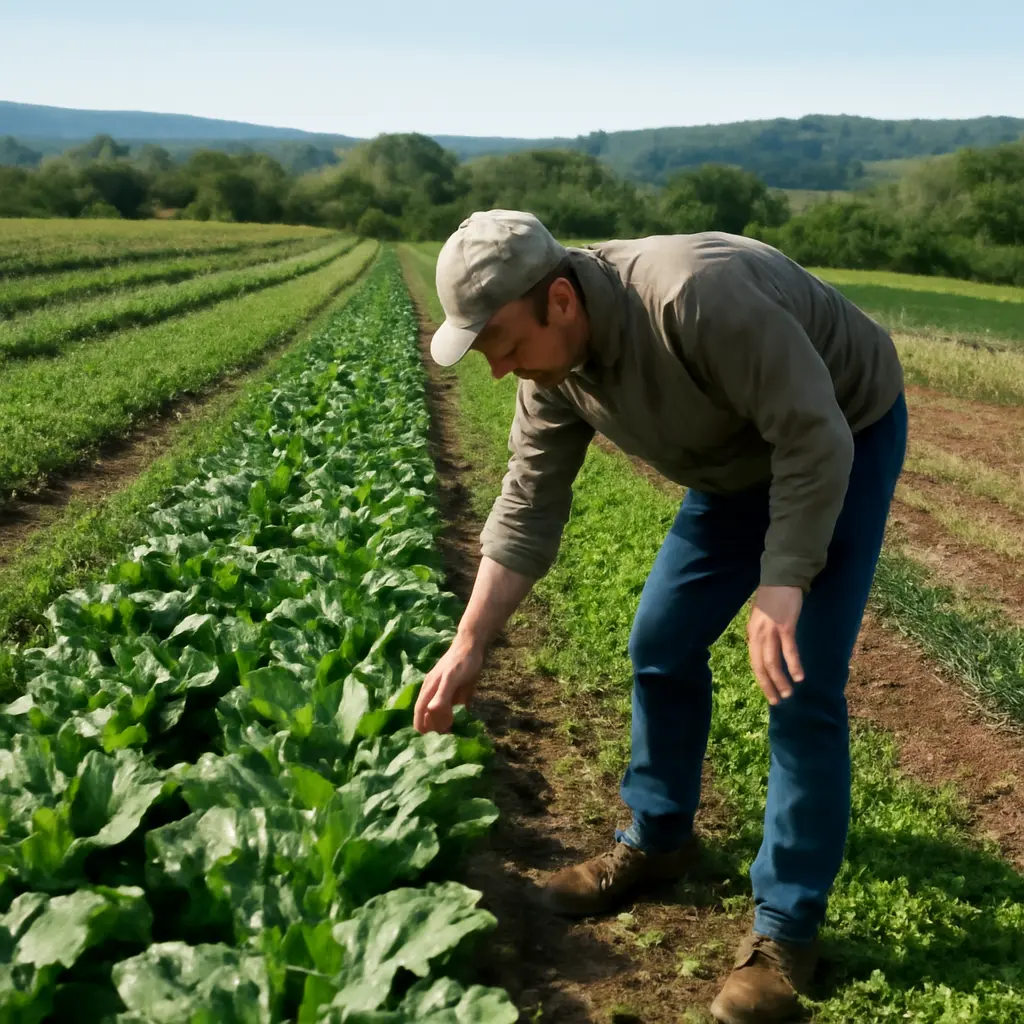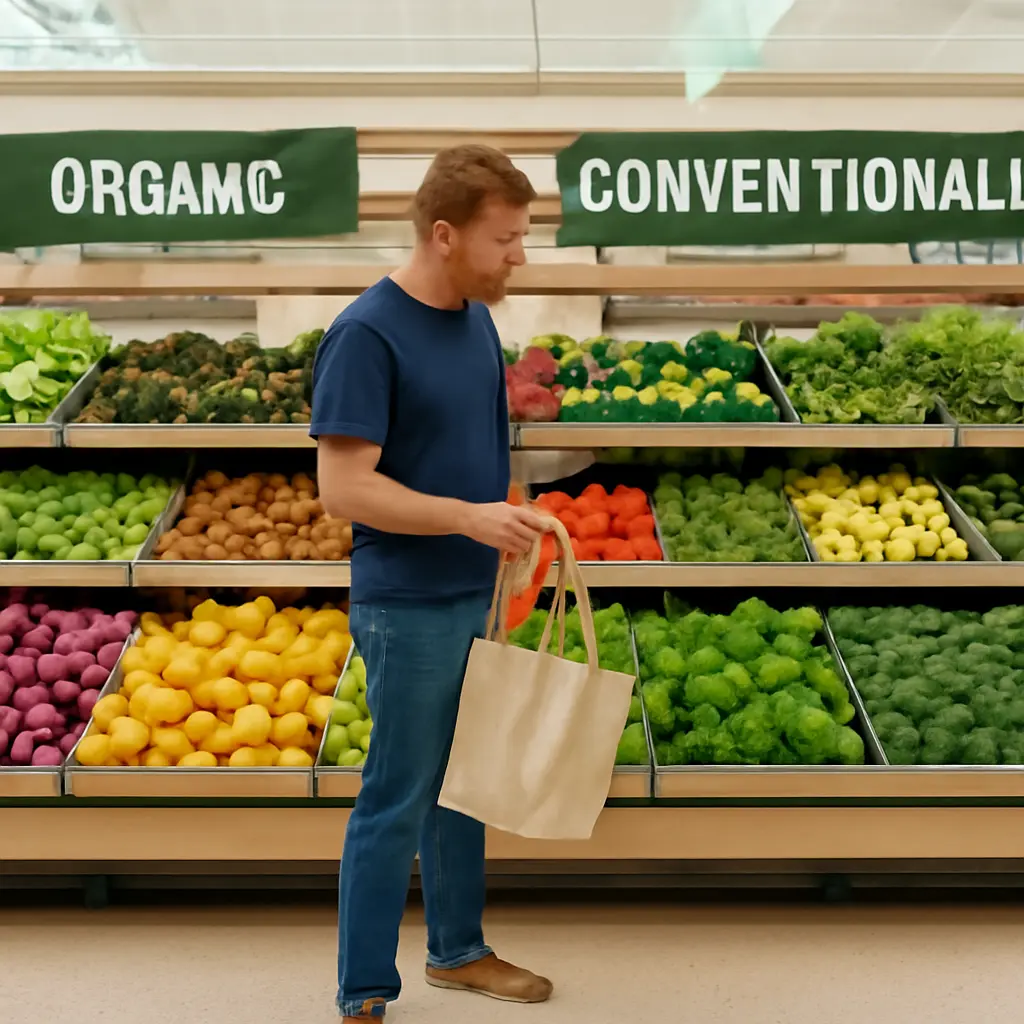
Organic food—food produced under certified standards that restrict most synthetic pesticides and fertilizers, prohibit genetic engineering, and set rules for livestock care—has moved from a niche choice toward a familiar part of grocery shopping. In the United States, certified-organic food sales reached $71.6 billion in 2024, up 5.2% from 2023, according to the Organic Trade Association. Growth reflects wider retail availability, consumers’ interest in ingredients and farming practices, and stronger investment in organic supply chains. Yet organic’s expanding reach also brings practical questions about price, certification, nutrition, and environmental impact.
Organic food’s market growth and mainstream reach
“Organic” is a regulated production and labeling claim, not simply a synonym for local, natural, or pesticide-free. In the United States, the U.S. Department of Agriculture (USDA) National Organic Program establishes the standards and oversees certification. The Organic Trade Association reported that total U.S. organic sales—including food and nonfood products—reached $71.6 billion in 2024. Organic food accounted for $65.4 billion, while nonfood organic products made up the remainder.
These figures point to a change in distribution as well as demand: organic products are increasingly sold through conventional supermarkets, mass retailers, online stores, and food-service channels, rather than only specialty shops. The category spans produce, dairy, packaged foods, meat, beverages, and pantry staples. A useful accompanying visual would be a bar chart comparing annual U.S. organic food sales with total organic-product sales, clearly distinguishing the two measures.
Certification makes the claim specific
USDA organic certification verifies that farms and businesses follow applicable production, handling, and recordkeeping requirements. Certified operations are inspected, and products must meet the rules for their label category. The USDA’s “100 percent organic” label applies to products made entirely with organic ingredients, apart from permitted processing aids; “organic” generally requires at least 95% organic ingredients; and “made with organic” identifies products containing at least 70% organic ingredients. These distinctions help shoppers interpret labels instead of assuming that every product displaying organic language has the same composition.
Retail access helps normalize organic shopping
As mainstream retailers add organic options to everyday departments, shoppers can compare organic and conventional products in one place and buy familiar categories rather than making a separate specialty-store trip. The Organic Trade Association’s 2024 sales results provide evidence of the category’s scale, although sales growth alone does not show how many households buy organic or how often. Availability, household income, product category, and regional supply all influence what consumers actually purchase.
Organic food’s consumer appeal and purchasing choices
Organic food’s growing visibility is connected to several different motives: interest in farming practices, concern about certain pesticide exposures, expectations about food quality, and support for environmental or animal-welfare goals. These motivations are not interchangeable, and the standards do not guarantee every benefit a shopper may associate with the word “organic.” Understanding the difference between what certification requires and what consumers hope it means is central to making informed choices.
Ingredient and production concerns
Organic rules restrict most synthetic pesticides and fertilizers, but they do not mean that no pesticides are used. Organic farmers may use certain substances allowed under the National Organic Program, and conventional farming also operates under pesticide regulation. The National Pesticide Information Center notes that exposure risk depends on factors such as a substance’s toxicity, dose, route, and duration of exposure. Organic certification therefore describes a production system; it is not, by itself, a complete measure of the safety of an individual food.
Nutrition and health claims need careful interpretation
Organic certification does not promise that a food is more nutritious, lower in calories, or beneficial for a particular disease. A 2012 systematic review in the Annals of Internal Medicine, led by researchers at Stanford University, found limited evidence that organic foods were significantly more nutritious than conventional foods, while reporting that consumption of organic produce could reduce exposure to pesticide residues. The authors also emphasized limitations in the available evidence. For everyday health, food variety and an overall balanced dietary pattern matter alongside production method.
Price and access shape the choice
Organic products can cost more because certified production may involve different labor, inputs, inspection, processing, and distribution costs, while supply and demand vary by product. Price premiums are not uniform: comparisons differ across retailers, regions, seasons, and food categories. For households on a budget, practical options include prioritizing foods they most want to buy organic, comparing unit prices, choosing seasonal produce, and using frozen or store-brand products when appropriate. A price comparison chart should identify the location, date, retailer, and unit size so readers can interpret it fairly.
Organic food’s farming standards and environmental considerations
Organic farming is a production approach with rules for soil fertility, pest management, crop rotation, livestock, and handling. Its environmental effects depend on the crop, region, farming practice, and outcome being measured. Organic methods can support some ecological goals, but a broad claim that organic is always better for the environment oversimplifies the evidence. Land use, yields, energy, water, biodiversity, and pollution all matter.
Soil, rotations, and pest management
USDA organic crop standards require practices that maintain or improve soil organic matter and support soil health, including soil-building methods such as crop rotations and cover crops where appropriate. Organic pest management emphasizes prevention and uses a limited set of permitted materials when other measures are insufficient. These practices can strengthen soil structure and diversify farm habitats, though results depend on how a farm applies them and on local conditions.
Environmental benefits and trade-offs
A 2017 meta-analysis in the Journal of Environmental Management, reviewing 742 agricultural systems, found that organic systems generally supported greater biodiversity but often had lower yields than conventional systems. The authors also found that differences varied by crop and context. Lower yields can mean more land is needed to produce the same amount of food, while reduced reliance on certain synthetic inputs can benefit other environmental measures. The appropriate comparison therefore depends on the impact being assessed, rather than on the label alone.
Livestock rules and animal care
Organic livestock standards require organic feed, access to the outdoors, and preventive health care practices, alongside restrictions on antibiotics and hormones in organic livestock production. These requirements distinguish certified organic meat, dairy, and eggs from products without that certification. The label does not replace scrutiny of specific welfare conditions, however; consumers seeking particular animal-care practices may need to look for additional, clearly defined standards.
Organic food’s supply-chain challenges and future direction
Mainstream growth depends on more than consumer interest. Farmers must be able to transition to organic production, processors and distributors need systems that preserve product identity, and retailers need dependable supplies at prices customers will accept. Certification and traceability are important throughout this chain because organic products must remain distinguishable from nonorganic products during handling and processing.
Transitioning farms and maintaining supply
A farm seeking organic certification generally must manage land under organic requirements for three years before crops can be sold as organic. During this transition, producers may face added costs and changes in management without receiving the full organic price premium. That lag can constrain supply even when demand is rising. Public programs, technical assistance, access to markets, and stable buyer relationships can help reduce the risks of transition.
Strengthening trust in labels
Trust depends on consistent standards, inspection, documentation, and enforcement. In the United States, the Strengthening Organic Enforcement rule took effect in 2024 and expanded oversight and traceability requirements across parts of the organic supply chain. Such measures matter as imports and complex processing networks grow: shoppers cannot inspect a farm’s practices directly, so credible certification helps connect a retail label to verifiable production rules.
Conclusion: Organic food’s mainstream future
Organic food is moving into the mainstream because sales are substantial, products are easier to find, and consumers bring varied concerns about ingredients, farming, health, and the environment to their shopping decisions. USDA certification gives “organic” a defined production meaning, while research shows that nutritional, environmental, and economic outcomes vary rather than fitting a simple organic-versus-conventional hierarchy. The category’s future will depend on accessible pricing, reliable supply, credible enforcement, and transparent claims. Shoppers can start by checking the label category, comparing products and prices, and choosing organic where its verified practices align with their priorities; policymakers and businesses can support informed choice by investing in transition assistance and trustworthy supply chains.
Sources: Organic Trade Association, 2025 Organic Industry Survey, https://ota.com/news/press-releases/organic-industry-survey-reveals-strong-growth-2024/; U.S. Department of Agriculture, Organic Labels Explained, https://www.ams.usda.gov/publications/content/how-label-organic; U.S. Department of Agriculture, Organic Standards, https://www.ams.usda.gov/standards/organic; National Pesticide Information Center, Pesticide Exposure, https://npic.orst.edu/health/exposure.html; Smith-Spangler et al., “Are Organic Foods Safer or Healthier Than Conventional Alternatives? A Systematic Review,” Annals of Internal Medicine, 2012, https://www.acpjournals.org/doi/10.7326/0003-4819-157-5-201209040-00007; Tuck et al., “-use intensity and the effects of organic farming on biodiversity: A hierarchical meta-analysis,” Journal of Environmental Management, 2017, https://doi.org/10.1016/j.jenvman.2016.11.025; U.S. Department of Agriculture, Strengthening Organic Enforcement, https://www.ams.usda.gov/rules-regulations/strengthening-organic-enforcement.