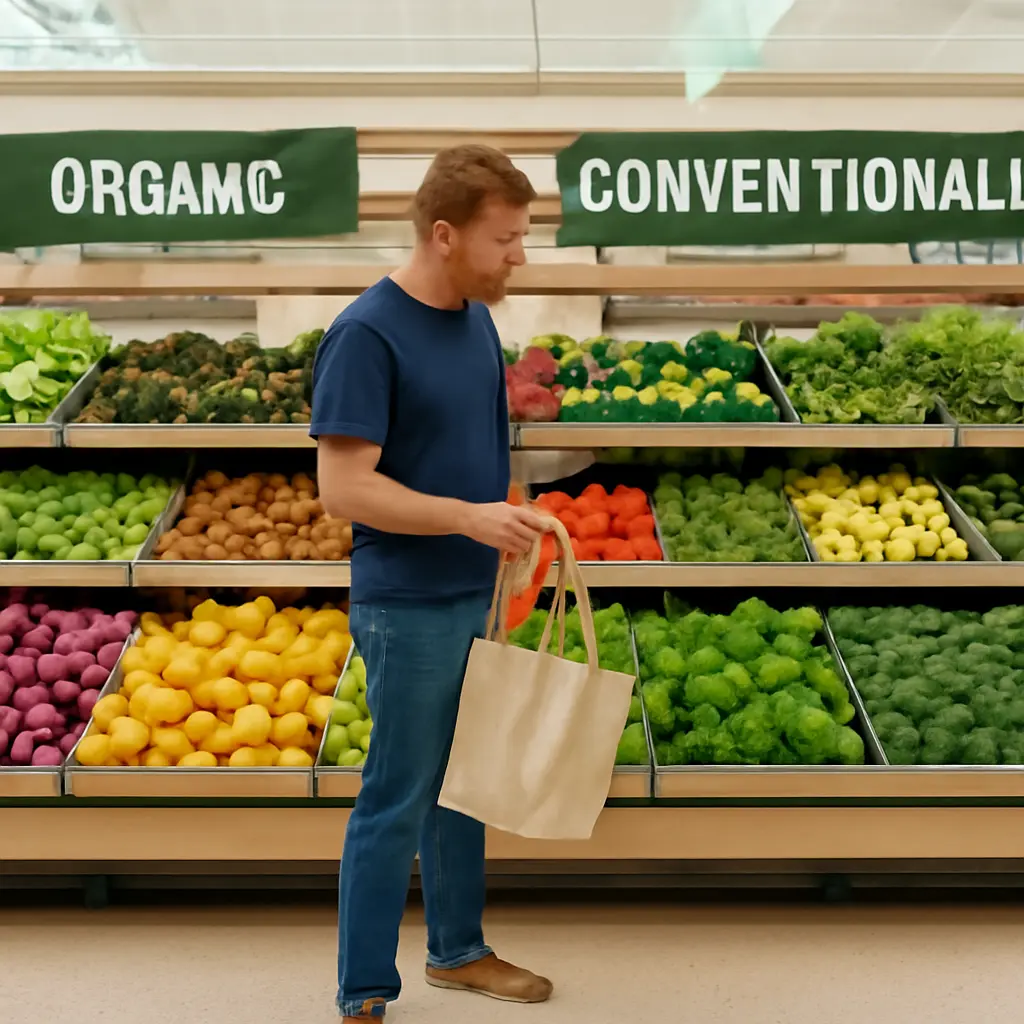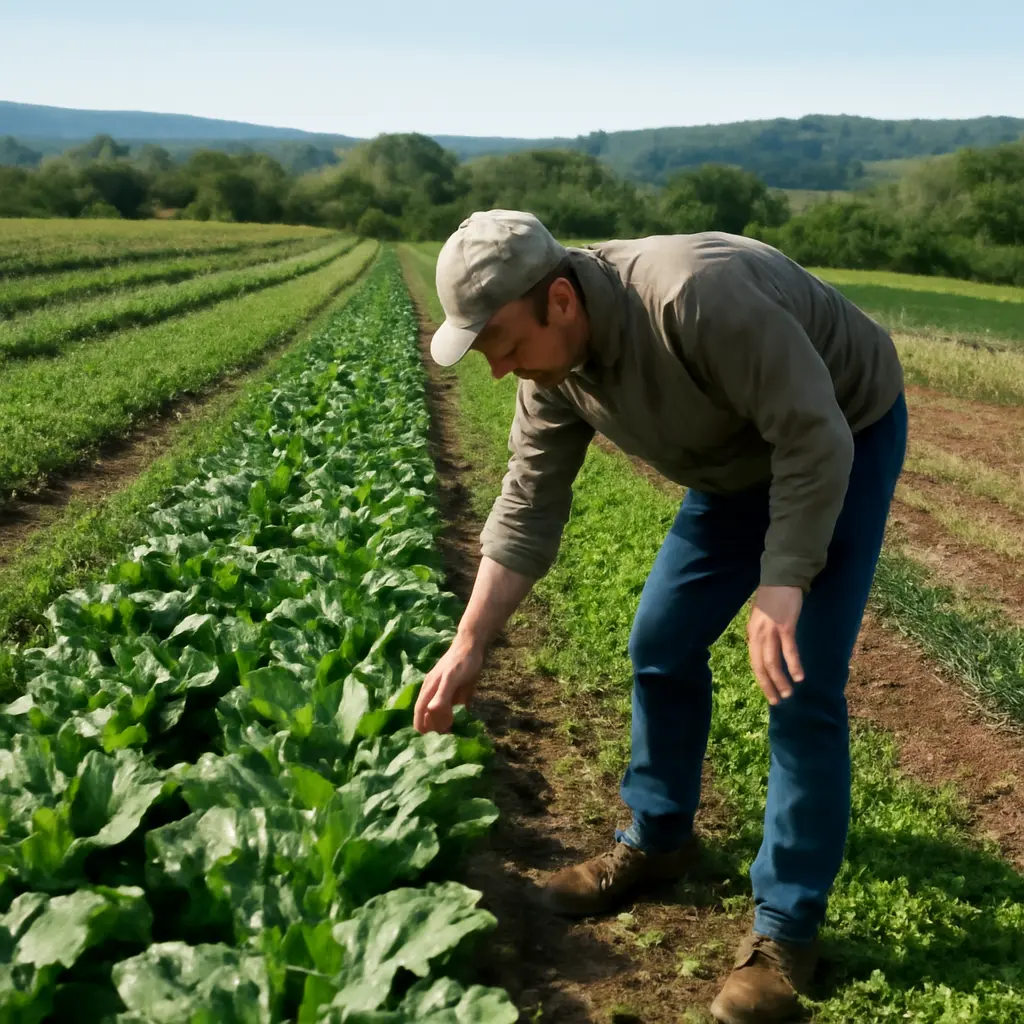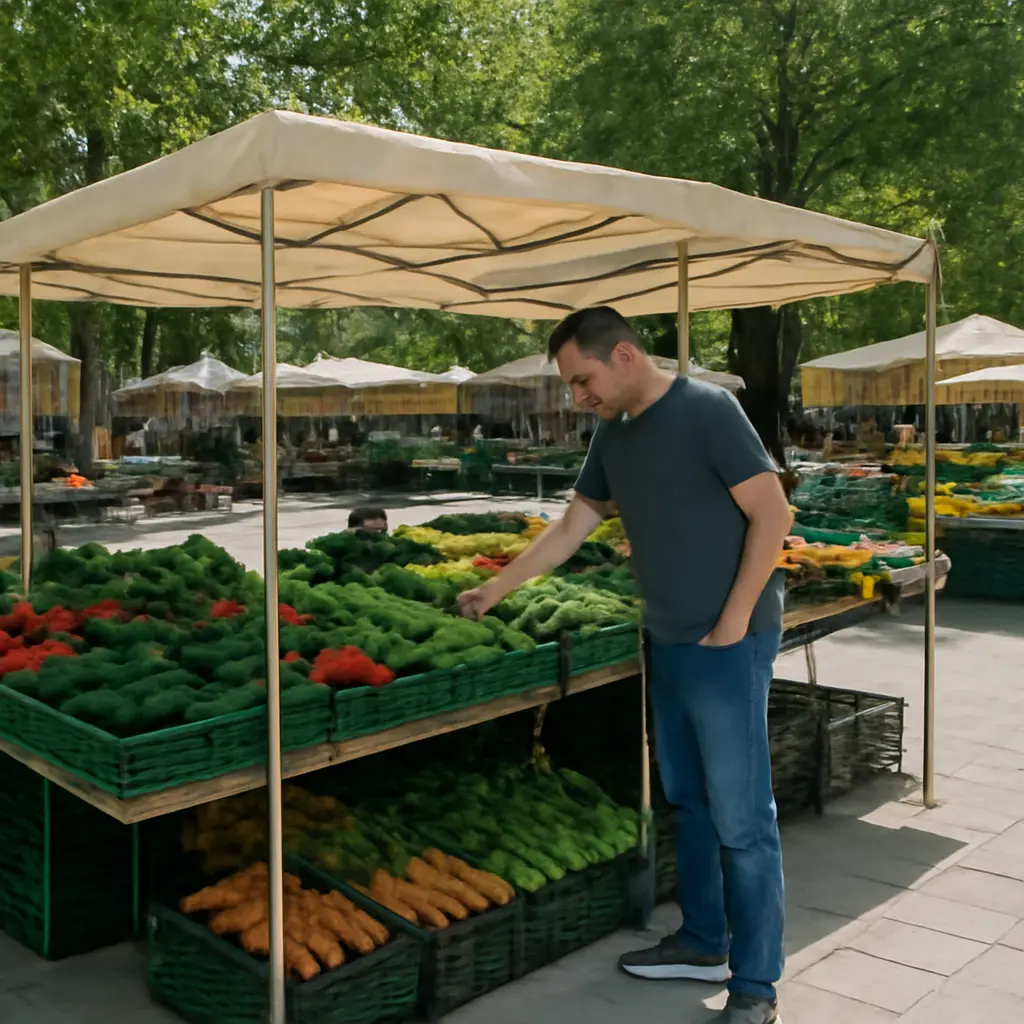
Organic food is food produced under a regulated agricultural standard that restricts most synthetic pesticides and fertilizers, prohibits genetically engineered inputs in many certification systems, and emphasizes specified soil and livestock practices. Globally, the market is growing but remains a small share of food sales: the Research Institute of Organic Agriculture (FiBL) and IFOAM—Organics International reported €136.4 billion in worldwide organic food and drink retail sales in 2023, with approximately 96.4 million hectares of agricultural land managed organically. This overview examines how organic food is defined and certified, where the market is growing, what motivates buyers, and which challenges—from price and supply to environmental claims—shape its prospects.
Standards and certification define the organic food market
Organic food is a regulated category, not simply a synonym for “natural” or “pesticide-free.” FiBL and IFOAM define organic agriculture through production systems grounded in ecological processes, biodiversity, and cycles adapted to local conditions. National and regional laws translate those principles into enforceable rules for farming, processing, labeling, and inspection. As a result, the meaning of an organic label depends on the standard and jurisdiction behind it.
Production rules and certification
Certification verifies that an operator follows a defined standard through documentation, inspections, and traceability controls. The European Union’s organic regulation governs production and labeling across the bloc, while the U.S. Department of Agriculture’s National Organic Program sets requirements for products marketed as organic in the United States. Both systems restrict many synthetic inputs, but their detailed rules and permitted substances are not identical. Certification also covers processing and handling, so an organic claim on a packaged product concerns more than the farm where its ingredients originated.
FiBL and IFOAM’s 2025 edition of The World of Organic Agriculture, reporting 2023 data, counted about 96.4 million hectares under organic management worldwide—roughly 2 percent of agricultural land. Australia accounted for the largest national area, in part because extensive grazing land contributes substantially to its total. This illustrates why acreage and retail sales measure different aspects of the sector: large land areas do not necessarily correspond to the largest consumer markets.
Labels, imports, and equivalence
Organic labels help consumers identify products produced under verified rules, but global trade requires systems to recognize and monitor one another. The European Commission maintains an import framework for organic products, while the USDA operates recognition and equivalence arrangements with selected trading partners. These arrangements can reduce duplicated certification while requiring oversight and compliance with agreed standards. The practical implication is that international organic supply chains depend on records, audits, and border controls as well as farm-level practices.
Certification does not mean that food contains no pesticide residues under every circumstance, nor does an organic claim by itself establish a product’s nutritional superiority. Standards focus on production methods and permitted inputs; residue rules, contamination risks, and nutrition are separate questions. This distinction is important when interpreting both label claims and scientific comparisons.
Market size and geography shape organic food growth
Market size describes consumer spending, while organic farmland and producer counts describe the production base. Together, these measures show a market with broad geographic reach but uneven development: demand is concentrated in high-income economies, whereas organic production occurs across a wider range of regions. FiBL and IFOAM estimated global organic retail sales at €136.4 billion in 2023, up from €135.0 billion in 2022.
Leading consumer markets
The United States remained the largest national market in the 2023 data, with approximately €59 billion in organic retail sales. Germany followed at about €16 billion, and China at roughly €12.6 billion. Per-person spending tells a different story: Switzerland and Denmark were among the countries with the highest annual organic food expenditure per capita. These comparisons show that a large population or total market does not necessarily mean the highest organic spending per resident.
Europe is a particularly mature market. The same FiBL and IFOAM report put European organic retail sales at approximately €54.7 billion in 2023, including €46.5 billion in the European Union. Denmark and Austria were among the countries with the highest organic shares of food retail sales. Retailer assortment, public awareness, and established certification systems can help explain market penetration, although affordability and national food habits also matter.
Production regions and trade flows
Organic farming is practiced on every inhabited continent, but the types of production and route to market differ. Large grazing areas contribute to Australia’s land total; European farms supply established domestic markets; and producers in Latin America, Africa, and Asia participate in both local and export-oriented value chains. A country’s organic acreage therefore cannot be read as a direct measure of domestic consumer demand.
Trade connects regions with different growing seasons and production capacities. Imported organic coffee, cocoa, fruit, and other commodities can widen consumer choice, but distance and multiple handling steps raise traceability demands. For buyers and regulators, the key questions include whether the producer is certified to a recognized standard, whether the supply chain preserves product identity, and whether the claim remains valid through processing and distribution.
Consumer demand reflects values, access, and affordability
Organic purchasing is influenced by perceived healthfulness, environmental concerns, animal-welfare considerations, trust in labels, and product availability. These motives vary by market and household, so no single explanation accounts for global demand. Survey results can reveal stated preferences, but actual purchases are also shaped by price, income, retail access, and the products available locally.
Health perceptions and evidence
Many consumers choose organic food because they expect lower exposure to certain synthetic pesticides or prefer its production rules. Research reviews, including a systematic review published in the Annals of Internal Medicine in 2012, found that evidence was limited for clear health advantages from consuming organic rather than conventional food. The review did find that organic produce was less likely to contain detectable pesticide residues, while emphasizing limitations in the available evidence. This supports a careful distinction between differences in production and proof of improved health outcomes.
Organic food remains subject to food-safety requirements. Consumers should continue to wash produce and handle food safely, whether it is organic or conventional. The label is most informative as a statement about verified production practices, not as a guarantee that a product is risk-free or nutritionally superior.
Price, availability, and the access gap
Organic products often cost more than comparable conventional products, although premiums vary by item, season, retailer, and country. Higher costs may reflect labor-intensive practices, certification and audit fees, separate handling, lower yields in some systems, or limited economies of scale. Price premiums can make organic food less accessible to lower-income households even where consumers express interest in it.
Retail access also affects purchasing. Supermarkets can offer broad selection and convenient distribution, while farmers’ markets, community-supported agriculture, and direct sales connect consumers with local producers. These channels differ in price, assortment, and availability. Public procurement programs and transparent labeling can broaden access, but affordability depends on the wider food system, including production costs and household income.
Environmental performance depends on farming practice and context
Organic agriculture is designed to manage farms through ecological processes, including crop rotations, soil-building practices, and restrictions on many synthetic inputs. Its environmental outcomes are not uniform: they depend on crop, climate, soil, farming methods, and the metric used. Comparing systems therefore requires looking beyond the label to outcomes such as biodiversity, soil condition, nutrient losses, and greenhouse-gas emissions per unit of production.
Soil, biodiversity, and input management
Organic standards commonly require practices intended to maintain or improve soil fertility, such as rotations and use of organic matter. A 2012 meta-analysis in Nature found that organic farming generally supported greater biodiversity than conventional farming, while also showing that the size of the difference varied among studies and settings. Field margins, landscape structure, crop choice, and pesticide use can influence biodiversity alongside certification status.
Organic does not mean “no pesticides.” Organic standards allow certain substances and methods, including some naturally derived or otherwise specifically permitted pest controls. The relevant comparison is therefore between approved management systems and their actual environmental effects, rather than between pesticide use and total pesticide absence.
Yield trade-offs and climate implications
A 2012 meta-analysis in Nature estimated that organic yields averaged about 25 percent lower than conventional yields across the studies it examined, with substantial variation by crop and management. Later research has likewise emphasized that yield gaps can narrow with crop rotation and good management, but differ by region and crop. If lower yields require more land to produce the same quantity, land-use effects may offset some environmental benefits.
Climate performance also depends on the accounting boundary. Organic systems may use less synthetic fertilizer, but emissions from soil, manure management, transport, and land-use change still matter. Researchers consequently assess both impacts per hectare and impacts per unit of food. Consumers and policymakers should treat sustainability as a set of measurable outcomes rather than assume that any one label guarantees the best result on every environmental measure.
Supply-chain challenges and future opportunities
The organic market’s next phase depends on maintaining consumer trust while expanding reliable supply. Producers must meet certification requirements and manage biological risks; processors and retailers must preserve segregation and traceability; and governments must enforce standards consistently. Digital records and risk-based inspection can support oversight, but they do not replace verification on the ground.
Certification costs and producer participation
Certification can be costly for small farms, particularly where producers are geographically dispersed or lack access to technical support. Group certification and internal control systems can help smallholders share compliance responsibilities, subject to the relevant standard’s rules and external oversight. Training in recordkeeping, soil management, and market requirements can also help farmers move from interest in organic production to a viable certified business.
Fraud prevention and resilient supply
Because organic products may command price premiums, false claims and weak documentation can damage trust throughout a supply chain. Strong inspection, traceability, enforcement, and transparent corrective action help protect consumers and legitimate producers. Supply resilience also matters: weather shocks, crop disease, labor shortages, and transport disruptions can affect organic availability just as they affect conventional food.
A practical way to interpret market developments is to pair retail-sales data with farmland, producer, and trade information. A chart comparing 2023 organic retail sales by country would show the concentration of spending in the United States and Europe, while a separate chart of organic agricultural area would highlight the different geography of production. Keeping those measures separate avoids confusing consumer demand with land devoted to organic farming.
Conclusion: a growing market with standards and trade-offs
The global organic food market combines regulated production standards, internationally connected supply chains, and consumer demand shaped by values and affordability. FiBL and IFOAM’s 2023 figures—€136.4 billion in retail sales and 96.4 million hectares under organic management—show meaningful scale, while the approximately 2 percent share of agricultural land underscores room for growth. Market leadership, consumer access, environmental outcomes, and certification capacity vary substantially across regions.
The central takeaway is to treat organic certification as useful information about production methods, not as a universal guarantee of health, sustainability, or food safety. Readers can learn more by consulting their national organic regulator, reviewing the latest FiBL and IFOAM market report, and comparing product claims with the standards that authorize them. Policymakers and businesses can support credible growth by improving producer access to certification, enforcing traceability, and measuring environmental performance transparently.
Sources: FiBL and IFOAM—Organics International, The World of Organic Agriculture: Statistics and Emerging Trends 2025, https://www.fibl.org/en/shop-en/1747-organic-world-2025; European Commission, Organic farming: legislation, https://agriculture.ec.europa.eu/farming/organic-farming/legislation_en; U.S. Department of Agriculture, National Organic Program, https://www.ams.usda.gov/about-ams/programs-offices/national-organic-program; Smith-Spangler et al., Are Organic Foods Safer or Healthier Than Conventional Alternatives? A Systematic Review, Annals of Internal Medicine, 2012, https://www.acpjournals.org/doi/10.7326/0003-4819-157-5-201209040-00007; Tuck et al., Land-use intensity and the effects of organic farming on biodiversity: a hierarchical meta-analysis, Journal of Applied Ecology, 2014, https://doi.org/10.1111/1365-2664.12219; Seufert, Ramankutty, and Foley, Comparing the yields of organic and conventional agriculture, Nature, 2012, https://doi.org/10.1038/nature11069.